Last Updated on September 7, 2026 by admin
When we open a can or pouch of wet cat food, we may notice its smooth, cohesive texture and consistent appearance. That texture does not happen by accident. Behind the scenes, pet food manufacturers use carefully selected ingredients to help control consistency, stability, moisture distribution, and overall product quality.
One such ingredient is guar gum.
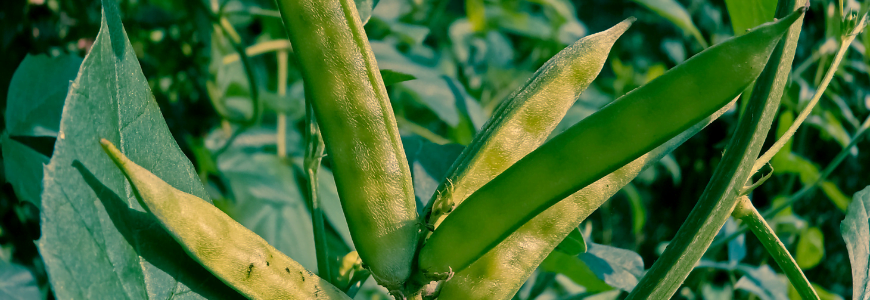
Derived from the seeds of the guar plant (Cyamopsis tetragonoloba), guar gum is a plant-based hydrocolloid known for its ability to hydrate and increase viscosity. It is widely used as a thickener, stabilizer, formulation aid, and texturizer.
So, what exactly is the role of guar gum in cat food?
In particular, why is guar gum in wet cat food formulations worth considering?
This guide explores 7 excellent benefits of guar gum for cat food, with a focus on texture, stability, processing, and formulation.
What is Guar Gum?
Guar gum is a natural polysaccharide obtained from the endosperm of guar seeds. When added to water, it hydrates and forms a viscous solution. This property makes it useful in a wide range of food and industrial applications.
From food products to cosmetics and industrial formulations, guar gum is valued for its ability to modify viscosity and improve consistency.
In pet food, its functional role is particularly interesting because many formulations—especially wet products—need controlled viscosity and a stable, uniform texture.
The FDA lists guar gum among ingredients with technical effects including stabilizer or thickener, formulation aid, texturizer, emulsifier, and firming agent.
This makes guar gum a useful functional ingredient for manufacturers developing specific pet food textures and formulations.
7 Benefits of Guar Gum in Cat Food:
1. Helps Create a Smooth and Consistent Texture —
One of the most important reasons manufacturers consider guar gum for cat food is its ability to modify texture.
When guar gum hydrates, it increases the viscosity of the surrounding liquid phase. In a wet formulation, this can help create a more consistent and cohesive product rather than a mixture that appears overly watery or uneven.
Texture is an important part of product development. A manufacturer may want a wet cat food formulation to have a smooth, spoonable or cohesive consistency depending on the product concept.
Guar gum can help formulators fine-tune this characteristic.
This is especially relevant when developing:
1. Wet cat food
2. Canned cat food
3. Pouches and gravy-based products
4. Meat-based wet formulations
5. Sauces and gravies for animal food
6. Moist pet food products
The exact result depends on the grade, concentration, processing conditions, and other ingredients used in the formulation.
2. Supports Viscosity Control in Wet Cat Food —
Viscosity is another important consideration when developing wet cat food.
A formulation that is too thin may not have the desired consistency, while one that is too thick may not provide the intended product characteristics.
This is where the hydration properties of guar gum can be useful.
As guar gum hydrates, it contributes to the viscosity of the aqueous phase. By selecting an appropriate grade and inclusion level, formulators can adjust the rheological properties of the product.
This makes guar gum in wet cat food particularly relevant for manufacturers working with products containing significant amounts of water or gravy.
However, there is no universal “best” guar gum level for every cat food. The appropriate specification should be established through formulation trials and validated against the finished product’s target characteristics.
3. Helps Improve Product Stability —
A good pet food formulation needs to remain reasonably uniform throughout its intended shelf life and handling conditions.
Ingredients can behave differently during processing and storage. Water, fats, proteins, minerals, meat ingredients, and other components can interact with one another, potentially affecting the product’s physical structure.
Guar gum can contribute to formulation stability because of its thickening and stabilizing properties.
By increasing the viscosity of the liquid phase, it can help manufacturers manage the movement of suspended components within the formulation.
This can be particularly useful when developing products where maintaining a consistent structure is important.
For manufacturers, the goal is not simply to “make the food thicker.” It is to achieve the right functional performance at the right concentration.
That is why selecting the appropriate guar gum grade for pet food matters.
4. Helps Maintain a More Uniform Formulation —
Imagine opening a pouch of wet cat food and finding that the gravy, meat particles, and other components have separated noticeably.
From a product-development perspective, maintaining uniformity can be an important consideration.
Guar gum can act as a functional aid in formulations where controlling the movement and distribution of components is necessary.
Its thickening properties can help create a more structured liquid phase, which may support a more uniform product.
For pet food manufacturers, this can be useful when working with complex formulations containing multiple ingredients.
The final performance, however, depends on the entire formulation—not guar gum alone.
Factors such as:
1. Ingredient composition
2. Water content
3. Processing temperature
4. Mixing conditions
5. Hydration time
6. Shear
7. pH
8. Guar gum grade
9. Inclusion level
can all influence the final result.
5. Can Support Different Texture Profiles —
Not every cat food product is designed to have exactly the same texture.
The market includes different types of wet cat food, including pâté-style products, chunks in gravy, minced formulations, and other textures.
This means manufacturers often need flexibility when designing their formulations.
Guar gum for cat food can be considered as part of a hydrocolloid system for developing the desired texture and viscosity.
Depending on the formulation and processing conditions, hydrocolloids can help manufacturers adjust characteristics such as thickness, cohesiveness, and mouthfeel.
This is one reason guar gum is valuable beyond simply being a “thickener.”
It gives formulators another tool for controlling the physical properties of a product.
6. Offers Plant-Based Functional Performance —
Guar gum comes from a plant source—the guar bean.
For manufacturers looking for plant-derived functional ingredients, this can make guar gum an attractive formulation option.
Its functionality comes primarily from its polysaccharide structure and strong affinity for water.
When hydrated, guar gum can produce significant viscosity at relatively low concentrations compared with many other food ingredients.
This functional efficiency is one reason guar gum is used across food applications.
The ingredient is also recognized in food ingredient references for functions such as thickening, stabilization and texturization.
For pet food manufacturers, however, “plant-based” should not automatically be interpreted as meaning that a particular grade is suitable for every animal-food application. Ingredient specifications, regulatory requirements, quality standards, and intended use should always be evaluated.
7. Gives Manufacturers Greater Formulation Flexibility —
Perhaps one of the biggest advantages of guar gum in pet food is the formulation flexibility it can provide.
Developing a successful cat food product involves balancing many variables at the same time.
Manufacturers may need to consider:
1. Texture
2. Viscosity
3. Ingredient dispersion
4. Processing conditions
5. Moisture content
6. Stability
7. Appearance
8. Palatability
9. Nutritional requirements
10. Packaging
11. Shelf-life performance
A functional hydrocolloid such as guar gum can become one part of this formulation toolbox.
Instead of treating guar gum as a one-size-fits-all ingredient, formulators can evaluate different grades according to the requirements of the final product.
This is particularly important for manufacturers producing multiple varieties of wet cat food.
Guar Gum in Wet Cat Food: Why Is It Commonly Considered?
Wet cat food typically contains substantially more moisture than dry cat food. For example, FDA notes that canned pet foods are typically around 75–78% moisture, while dry pet foods are typically around 10–12%.
That difference makes texture and water management particularly important in wet formulations.
Because guar gum hydrates in water and contributes viscosity, it can be useful when formulators are developing wet products that require controlled consistency.
In a gravy-style product, for example, the manufacturer may want a certain level of viscosity and ingredient distribution.
In a pâté-style formulation, the objective may be different.
Therefore, the same guar gum specification may not necessarily be ideal for every product.
This is why guar gum in wet cat food should be selected based on the specific formulation rather than simply choosing the highest-viscosity product available.
Is Guar Gum in Cat Food Okay?
One of the most common questions people ask is: “Is guar gum in cat food okay?”
The answer needs some context.
Guar gum is a recognized food ingredient with established technical functions, including thickening and stabilization.
However, when discussing animal food, it is important to distinguish between a general food ingredient and its use in a particular animal-food formulation.
FDA explains that substances used in animal food must be appropriately authorized or otherwise meet the applicable regulatory basis for their intended use.
For that reason, manufacturers should use a guar gum grade appropriate for the intended animal-food application and comply with the regulations applicable in their target market.
It is also important not to assume that a food ingredient’s status for human food automatically means it has the same regulatory status for animal food. FDA specifically cautions that human-food GRAS status should not automatically be treated as authorization for animal-food use.
For finished pet food, overall nutritional adequacy and safety depend on the complete formulation, not one ingredient alone.
Does Guar Gum Provide Nutritional Benefits to Cats?
This is an important distinction.
Guar gum is primarily used for its functional properties in formulations. It should not be treated as a replacement for essential nutrients such as high-quality protein, amino acids, fats, vitamins, and minerals required in a properly formulated feline diet.
A complete and balanced cat food must meet appropriate nutritional requirements. FDA notes that products carrying a “complete and balanced” nutritional adequacy statement must meet applicable nutrient profiles or pass appropriate feeding trials.
Therefore, the main reason to use guar gum in cat food is generally related to formulation functionality, such as texture, viscosity, and stabilization—not because it supplies the nutritional foundation of the diet.
Choosing the Right Guar Gum for Cat Food
Not all guar gum powders are identical in performance.
When selecting guar gum for cat food, manufacturers should consider specifications such as:
1. Viscosity:
Different grades can provide different viscosity levels. The right choice depends on the desired texture and formulation.
2. Hydration Rate:
How quickly the guar gum hydrates can influence processing efficiency and final product performance.
3. Particle Size:
Powder fineness can influence dispersion and hydration behavior.
4. Microbiological Quality:
For food and pet food applications, microbiological specifications are important. Manufacturers should request relevant quality documentation and testing according to their requirements.
5. Purity and Specifications:
A suitable ingredient should meet the buyer’s agreed specifications for parameters such as moisture, viscosity, microbiological limits, and other relevant quality characteristics.
6. Regulatory Suitability:
The grade should be appropriate for its intended use and comply with the applicable regulations of the destination market.
7. Consistency Between Batches:
For commercial pet food production, consistent raw material performance is important. Variations in guar gum properties can affect the final formulation.
Guar Gum in Pet Food vs. Guar Gum in Animal Feed:
The phrase guar gum in animal feed is broader than guar gum in cat food.
Animal feed can refer to feed intended for livestock and other animals, while cat food falls within companion-animal food.
The formulation objectives can also be very different.
For example, a manufacturer developing cattle feed may have completely different requirements from a manufacturer developing a premium wet cat food.
Therefore, it is better to select guar gum according to the specific application, animal species, processing method, and desired functionality rather than treating all animal-feed applications as identical.
What Should Pet Food Manufacturers Ask a Guar Gum Supplier?
If you are sourcing guar gum for a commercial cat food formulation, don’t look only at price.
A reliable guar gum supplier should be able to provide useful technical information to help your R&D and procurement teams evaluate the ingredient.
Consider asking for:
1. Product specification sheet
2. Technical data sheet
3. Certificate of Analysis (COA)
4. Microbiological specifications
5. Viscosity specifications
6. Moisture specification
7. Particle-size information
8. Application guidance
9. Packaging details
10. Batch-to-batch consistency information
11. Relevant food/pet-food compliance documentation
12. Samples for formulation trials
A sample can be particularly useful because your technical team can evaluate hydration, viscosity, dispersion, and interaction with the rest of the formulation before moving toward commercial production.
Why Grade Selection Matters:
The biggest mistake manufacturers can make is assuming that one guar gum grade will work equally well in every application.
A cat food formulation is a system.
Changing the protein source, water level, fat content, processing conditions, or other hydrocolloids can change how guar gum performs.
For example, a grade that provides the desired viscosity in one gravy formulation may not produce exactly the same result in another formulation.
That’s why formulation trials matter.
The objective should be to find the right balance between functionality, processing performance, product texture, and cost.
Final Thoughts:
Guar gum in cat food is primarily valuable because of its functional properties.
From supporting viscosity and texture to helping manufacturers develop more consistent wet formulations, guar gum can be a useful ingredient in the pet food formulator’s toolbox.
For guar gum in wet cat food, the right grade and usage level should always be determined according to the specific formulation and processing requirements.
That is where product specifications, samples, technical support, quality control, and reliable supply become important.
Looking for Guar Gum for Your Cat Food Formulation?
If you are a pet food manufacturer, R&D professional, or procurement team looking for guar gum for cat food applications, selecting the right grade can make a significant difference in formulation performance.
At Durga Enterprises, we can help you evaluate guar gum based on your application requirements, including viscosity, particle size, quality specifications, and intended use.
Looking for a suitable guar gum grade for your formulation? Contact us for product specifications, samples, and further information.