Last Updated on December 23, 2025 by admin
The global demand for natural, plant-based, and cost-efficient ingredients has increased significantly over the past decade. Industries across food processing, pharmaceuticals, oil drilling, cosmetics, and animal nutrition are shifting towards ingredients that offer consistent performance while supporting clean-label and sustainability goals. Among all hydrocolloids, guar gum has emerged as one of the most preferred natural additives.
What stands out globally is that the majority of guar gum used worldwide comes from one country – India. Today, Indian Guar Gum is recognized as the benchmark for quality, availability, and reliability. This leadership is the result of a unique combination of agricultural strength, processing expertise, pricing advantage, and global trade experience.
Understanding Guar Gum and Its Global Importance
Guar gum is a natural thickening and stabilizing agent extracted from the endosperm of guar beans. It is valued for its ability to deliver high viscosity even at low concentrations, making it both efficient and economical for manufacturers. Because of these properties, guar gum powder is widely used in:
* Processed food and beverages
* Oil and gas drilling fluids
* Pharmaceutical formulations
* Cosmetics and personal care products
* Textile and paper industries
As global demand for natural thickening agents and clean label ingredients continues to rise, guar gum has become a critical raw material across multiple sectors.
Why India Leads Global Guar Bean Production?
One of the primary reasons for India’s dominance is its natural suitability for guar cultivation. The guar plant thrives in hot, dry climates with minimal rainfall, conditions that are naturally present in several Indian states.
Regions such as Rajasthan, Gujarat, Haryana, and parts of Punjab form the heart of India’s guar-growing belt. These areas collectively account for more than 80% of the world’s guar bean production. This massive raw material availability ensures uninterrupted supply, which directly strengthens the position of Indian Guar Gum in global markets.
In addition to climate, guar farming in India is deeply rooted in tradition. Farmers have been growing guar for generations, leading to improved seed quality, better yields, and higher gum content in beans. This experience translates into consistent raw material quality, which is essential for producing high-performance guar gum.
Advanced Processing Capabilities in India:
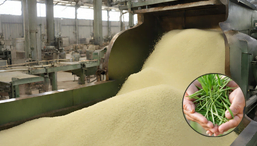
Raw material alone does not define market leadership; processing quality plays an equally important role. Over the years, India has developed a strong guar gum processing ecosystem supported by modern technology and skilled manpower.
Indian manufacturers use advanced techniques for:
* Cleaning and dehusking guar seeds
* Controlled grinding and drying
* Particle size standardization
* Batch-wise quality testing
These processes allow manufacturers to produce food grade guar gum, industrial grade guar gum, and pharmaceutical-grade variants that meet international specifications. As a result, Indian Guar Gum consistently complies with global standards such as FDA, FSSAI, ISO, HACCP, Kosher, and Halal certifications.
Quality Consistency That Global Buyers Trust:
Consistency is one of the most important factors for international buyers. Industries such as food processing and oil drilling cannot afford fluctuations in performance from one batch to another.
Indian suppliers focus strongly on maintaining:
* Stable viscosity levels
* Excellent hydration speed
* Uniform particle distribution
* Low microbial counts
Because of this, Indian Guar Gum is known for reliable performance across diverse applications. Many global buyers prefer Indian origin guar gum because it reduces formulation issues and production risks.
Wide Industrial Applications of Indian Guar Gum:
One of the strongest reasons behind India’s global dominance is the versatility of guar gum across industries.
1. Food Industry Applications:
In the food sector, guar gum is widely used to improve texture, moisture retention, and shelf life. It plays a vital role in products such as sauces, dressings, bakery items, dairy products, beverages, and gluten-free foods. Due to its plant-based nature and clean label appeal, guar gum in food industry applications continues to grow rapidly.
2. Oil and Gas Industry Applications:
In oil drilling and hydraulic fracturing, guar gum is used for viscosity control, water loss prevention, and suspension of solids. The oil and gas industry requires guar gum that performs consistently under extreme conditions. Guar gum in oil drilling sourced from India has proven reliable, making India a preferred supplier for this sector.
4. Cost Advantage Without Quality Compromise:
India’s large-scale guar cultivation and domestic processing provide a significant pricing advantage. High raw material availability, efficient labor, and established manufacturing infrastructure help Indian exporters offer competitive prices.
For global buyers, this means:
* Lower sourcing costs
* Stable long-term supply contracts
* Better profitability without performance loss
This balance of quality and cost is a key reason why Indian Guar Gum dominates international trade.
Strong Export Infrastructure and Global Reach:
India has a well-developed export ecosystem that supports the guar gum industry. Major ports such as Mundra, Kandla, and Nhava Sheva handle bulk shipments efficiently, while exporters are experienced in international documentation and compliance.
Indian suppliers understand global buyer requirements related to:
* Certificates of Analysis (COA)
* Material Safety Data Sheets (MSDS)
* Technical data sheets
* Custom packaging and labeling
This professional export approach further strengthens confidence in Indian Guar Gum suppliers.
Sustainability and Clean Label Appeal:
Guar is a drought-resistant crop that requires relatively less water, making it environmentally sustainable. As global brands increasingly prioritize sustainability and clean sourcing, guar gum aligns perfectly with these goals.
The rising demand for clean label ingredients has further boosted the popularity of Indian Guar Gum, especially in food and personal care industries.
Future Outlook of Indian Guar Gum in Global Markets:
The global guar gum market is expected to grow steadily due to increasing demand from processed foods, pharmaceuticals, and energy exploration. With its strong agricultural base, modern processing capabilities, and global trade experience, India is well-positioned to maintain its leadership.
Looking ahead, Indian Guar Gum is set to remain a key ingredient in global supply chains, supported by consistent quality, competitive pricing, and trusted sourcing.
Conclusion:
India’s dominance in the guar gum market is the result of multiple interconnected factors. Favorable climate, experienced farmers, advanced processing, wide industrial applications, cost efficiency, and strong export infrastructure all contribute to this leadership.
For international buyers seeking reliability, performance, and value, Indian Guar Gum continues to be the preferred choice in the global market.
FAQs:
1. What makes Indian guar gum different from guar gum sourced from other countries?
Last Updated on December 23, 2025 by admin
Indian guar gum stands out due to its higher viscosity, consistent quality, and reliable supply. India produces the majority of the world’s guar beans, which allows manufacturers to control raw material quality and maintain stable production throughout the year.
2. Why is India the largest producer of guar gum in the world?
Last Updated on December 23, 2025 by admin
India has the ideal climate for guar cultivation, including hot temperatures, low rainfall, and sandy soil. States like Rajasthan and Gujarat produce large volumes of guar beans, making India the global leader in guar gum production and export.
3. Is Indian guar gum safe for food applications?
Last Updated on December 23, 2025 by admin
Yes, food grade guar gum produced in India follows international safety and quality standards such as FDA, FSSAI, ISO, HACCP, Kosher, and Halal. This makes it safe and widely accepted for use in food and beverage products.
4. Which industries use Indian guar gum the most?
Last Updated on December 23, 2025 by admin
Indian guar gum is widely used in the food industry, oil and gas sector, pharmaceuticals, cosmetics, textiles, paper manufacturing, and animal feed due to its versatility and cost efficiency.
5. Why is Indian guar gum preferred in the oil drilling industry?
Last Updated on December 23, 2025 by admin
The oil and gas industry requires guar gum that performs consistently under extreme pressure and temperature conditions. Indian guar gum offers stable viscosity and hydration, making it suitable for hydraulic fracturing and drilling fluids.
6. Is Indian guar gum suitable for clean label and natural products?
Last Updated on December 23, 2025 by admin
Yes, guar gum is a plant-based, natural thickening agent. Indian guar gum fits perfectly into clean label formulations and is increasingly used by brands focusing on natural and minimally processed ingredients.
7. How does Indian guar gum help reduce production costs?
Last Updated on December 23, 2025 by admin
Indian guar gum delivers high viscosity at low dosage, which means manufacturers can use smaller quantities to achieve desired results. Combined with competitive pricing, this helps reduce overall formulation and production costs.
8. Can Indian guar gum be customized for different applications?
Last Updated on December 23, 2025 by admin
Yes, Indian manufacturers offer customized grades of guar gum based on viscosity, mesh size, and application requirements for food, industrial, pharmaceutical, and cosmetic use.
9. What quality checks are performed on Indian guar gum before export?
Last Updated on December 23, 2025 by admin
Indian manufacturers conduct batch-wise testing for viscosity, moisture, microbial content, and purity. Certificates of Analysis and technical data sheets are provided to ensure transparency and compliance.
10. Why do global buyers trust Indian guar gum exporters?
Last Updated on December 23, 2025 by admin
Indian exporters have decades of experience in global trade, understand international compliance requirements, and maintain consistent communication. This reliability has built long-term trust with buyers worldwide.